
Introduction
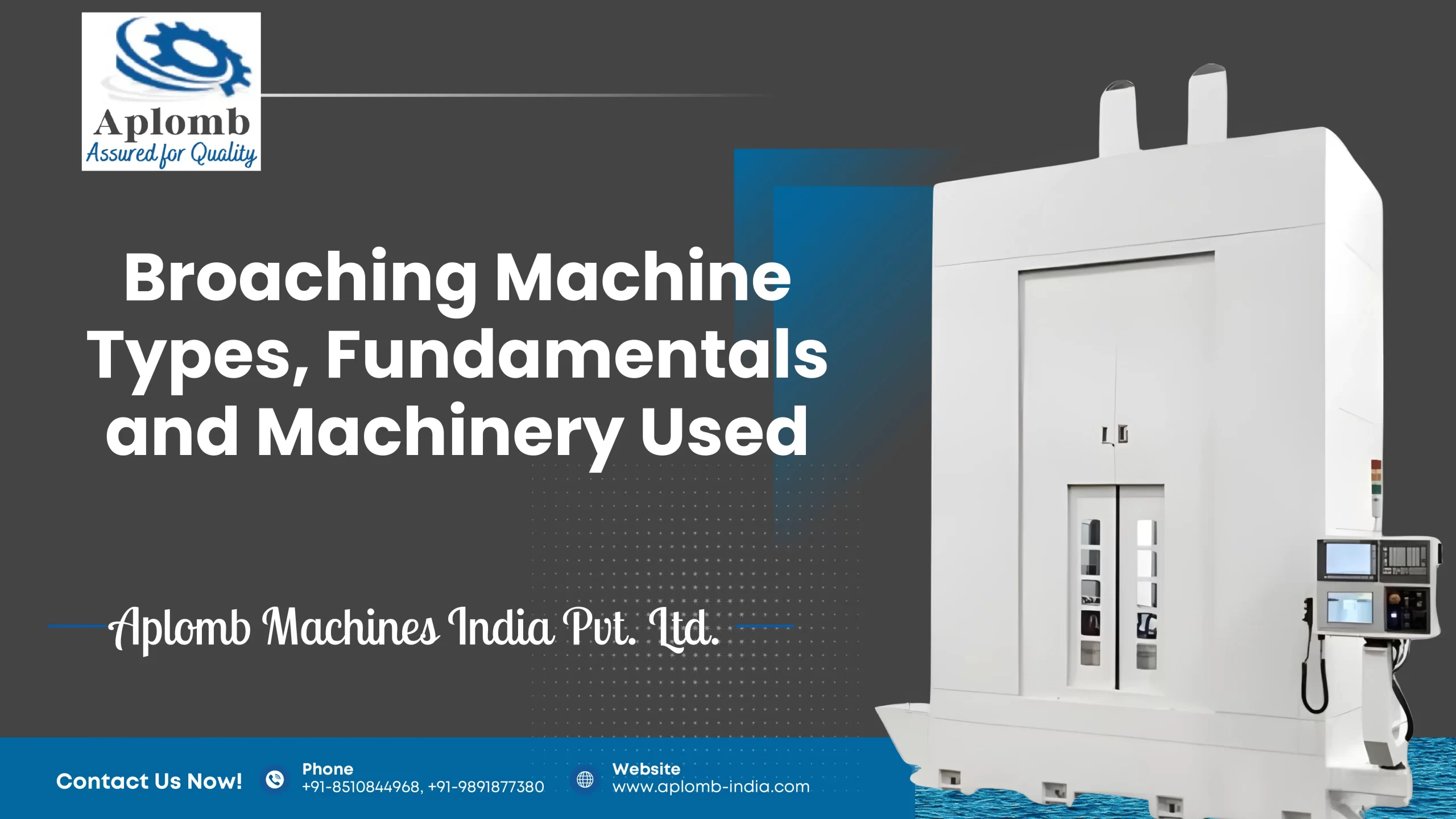
Aplomb Machines India Private Limited is a trusted name in manufacturing high quality broaching machines. Our company focuses on providing machines that are fast accurate and durable. A broaching machine is a special type of machine used to shape and finish metal parts. It uses a broach tool with multiple teeth that remove material step by step giving the final product a smooth and precise finish.
For many years, Aplomb Machines India Private Limited has been serving industries like automobile, aerospace, defense, and engineering with advanced solutions. Our company always emphasizes quality and innovation. That is why our machines are easy to operate and help reduce production costs.
In today’s industries, machines must deliver high performance and long life. Our broaching machines are designed keeping these needs in mind. We understand the requirements of our clients and also provide customized solutions. If you are looking for a reliable broaching machine manufacturer, Aplomb Machines India Private Limited is the right choice for you.
Fundamentals of Broaching
Broaching is a machining process that works on the principle of step by step material removal using a tool called a broach. The main idea is that each tooth of the broach removes a small amount of material. By the time the broach completes its stroke, the workpiece has the desired shape or finish.
Key Fundamentals:
- Broach Tool: The broach has several teeth arranged in a sequence. The front teeth remove more material (roughing), while the back teeth provide a smooth finish.
- Workpiece: This is the metal or material that needs shaping. It is fixed securely in the machine during the process.
- Cutting Action: The broach moves in a straight line—either pulled or pushed—over the workpiece. This ensures consistent and precise cuts.
- Accuracy: Broaching gives high accuracy and smooth surfaces, which is why it is used for complex shapes like keyways, splines, and gears.
- Efficiency: The process is fast and suitable for mass production. A single stroke can do what multiple cutting operations would take.
- Machine Type: Horizontal or vertical broaching machines are used depending on the size and type of workpiece.
The fundamentals of broaching focus on precision, efficiency, and controlled material removal to achieve the desired shape quickly.
Types of Broaching Machines
Broaching machines are designed to shape metal parts accurately and quickly. They are mainly classified based on the direction of the broach movement and the type of work they handle.
1. Horizontal Broaching Machine
- In this type, the broach moves horizontally over the workpiece.
- Best for long and heavy workpieces.
- Commonly used in industries for gears, slots, and keyways.
- Provides high stability and precision for large parts.
2. Vertical Broaching Machine
- The broach moves vertically in this machine.
- Saves floor space and is suitable for small to medium parts.
- Often used for holes, internal splines, and smaller workpieces.
3. Push Type Broaching Machine
- The broach is pushed through the workpiece.
- Simple design and commonly used for smaller jobs.
4. Pull Type Broaching Machine
- The broach is pulled through the workpiece.
- Provides better control and is used for precision parts.
5. Continuous Broaching Machine
- Used in mass production.
- The workpiece moves continuously, increasing efficiency.
6. Rotary Broaching Machine
- The broach rotates while cutting.
- Used for special shapes like polygons and keyways.
Each type of broaching machine has its specific application. Choosing the right machine depends on the workpiece size, shape, and production volume.
Machinery Used for Broaching
Broaching requires specific machines and tools to shape metal parts accurately and efficiently. The main machinery and components include:
1. Broach Tool
- The most important part of the process.
- It has multiple teeth arranged in a sequence.
- Front teeth remove most material (roughing), and the back teeth give a smooth finish.
2. Work Holding Device
- This holds the workpiece securely during broaching.
- Proper clamping ensures precision and prevents the part from moving.
3. Drive Mechanism
- Moves the broach through the workpiece.
- Can be mechanical or hydraulic depending on the machine type.
- Ensures consistent speed and force for accurate cutting.
4. Coolant System
- Reduces heat and friction during cutting.
- Helps improve the life of the broach tool and gives a smooth surface finish.
5. Machine Frame
- A strong and stable structure supports all components.
- Maintains accuracy and alignment during heavy operations.
6. Additional Accessories
- Some machines use guides, stops, or automation for mass production.
- These help increase efficiency and reduce manual errors.
In short, broaching machinery combines a precise tool, strong support, controlled motion, and cooling system to produce accurate and high-quality parts efficiently.
Broaching Tool Design Terms
The design of a broaching tool is very important to ensure accurate cutting and smooth finishes. Understanding its key terms helps in selecting or designing the right broach for a job.
1. Roughing Teeth
- The front teeth of the broach.
- Remove the largest amount of material.
- They prepare the workpiece for finishing.
2. Semi-Finishing Teeth
- Teeth located after the roughing teeth.
- Remove less material than roughing teeth.
- Help reduce cutting stress and prepare for final finishing.
3. Finishing Teeth
- The last set of teeth on the broach.
- Give the workpiece a smooth surface and accurate dimensions.
4. Pitch
- The distance between the same point on consecutive teeth.
- Determines the material removal rate and surface finish.
5. Rise per Tooth (RPT)
- The amount of material each tooth removes.
- Roughing teeth have higher RPT, finishing teeth have lower RPT.
6. Shank
- The part of the broach that is held by the machine.
- Provides stability during cutting.
7. Back-off
- Slight relief behind each tooth.
- Prevents rubbing and reduces friction during cutting.
8. Keyway/Profiles
- Broaches can be designed for keyways, splines, holes, or custom shapes.
- The design determines the final shape of the workpiece.
the broach tool is designed with roughing, semi-finishing, and finishing teeth, correct pitch, and proper shape to ensure fast, accurate, and smooth machining
Principle of Broaching
The principle of broaching is based on step-by-step material removal using a specially designed tool called a broach. Each tooth on the broach removes a small amount of material from the workpiece. By the time the broach completes its stroke, the workpiece has the desired shape, size, and finish.
Key Points of the Broaching Principle:
- Sequential Cutting:
- The broach has roughing, semi-finishing, and finishing teeth.
- Roughing teeth remove most material, while finishing teeth provide a smooth surface.
- The broach has roughing, semi-finishing, and finishing teeth.
- Linear Motion:
- The broach moves in a straight line—either pulled or pushed—over the workpiece.
- This ensures uniform material removal along the entire length.
- The broach moves in a straight line—either pulled or pushed—over the workpiece.
- Controlled Material Removal:
- Each tooth removes only a small amount of material (called Rise per Tooth or RPT).
- This prevents excessive stress on the tool and ensures accuracy.
- Each tooth removes only a small amount of material (called Rise per Tooth or RPT).
- High Precision:
- Because material is removed gradually, the process produces highly accurate dimensions and smooth finishes.
- Because material is removed gradually, the process produces highly accurate dimensions and smooth finishes.
- Efficiency:
- Broaching is a fast and efficient process, often completing a cut in a single pass.
- Broaching is a fast and efficient process, often completing a cut in a single pass.
In short: The principle of broaching relies on progressive cutting by multiple teeth, moving linearly over the workpiece to achieve a precise, smooth, and high-quality finished part.
. Advantages of Broaching Machines
- High Accuracy: Produces precise shapes with minimal error.
- Smooth Finish: Final surface is polished and uniform.
- Fast Production: Single pass removes material quickly.
- Versatile Shapes: Can create holes, keyways, gears, splines, and special profiles.
- Reduced Labor: Less manual intervention needed compared to other cutting methods.
8. Applications of Broaching Machines
- Automobile Industry: Transmission gears, engine components, and shafts.
- Aerospace Industry: Precision parts for aircraft engines and structures.
- Defense Industry: Weapons and equipment parts with high precision.
- Engineering Workshops: Custom tools, dies, and machine parts.
- Mass Production: For industries requiring high-volume identical parts.
9. Materials Commonly Broached
- Steel and Stainless Steel: Most common in industrial applications.
- Aluminum and Copper Alloys: Used for lightweight components.
- Brass and Bronze: For mechanical and decorative parts.
- Other Metals: Titanium, nickel alloys for aerospace and defense.
10. Maintenance Tips for Broaching Machines
- Regular Lubrication: Keep drive and moving parts smooth.
- Check Tool Wear: Replace worn broaches to maintain accuracy.
- Clean Work Area: Remove chips and debris to prevent damage.
- Inspect Fixtures: Ensure workpieces are clamped correctly.
- Coolant Maintenance: Replace or refill to prevent overheating and extend tool life.
11. Future of Broaching Machines
- Automation: CNC and robotic broaching for faster production.
- Advanced Materials: Broaches made from longer-lasting materials.
- Precision Engineering: Improved accuracy for aerospace and defense industries.
- Sustainable Practices: Energy-efficient machines and better coolant systems.
12. Conclusion
Broaching machines are essential for industries that require high precision, smooth finish, and fast production. From horizontal to vertical, push to pull, each machine type has a specific application. Tools are carefully designed with roughing, semi-finishing, and finishing teeth to ensure accurate cutting. With proper maintenance and advanced technology, broaching machines from trusted manufacturers like Aplomb Machines India Private Limited remain reliable solutions for modern industrial needs.