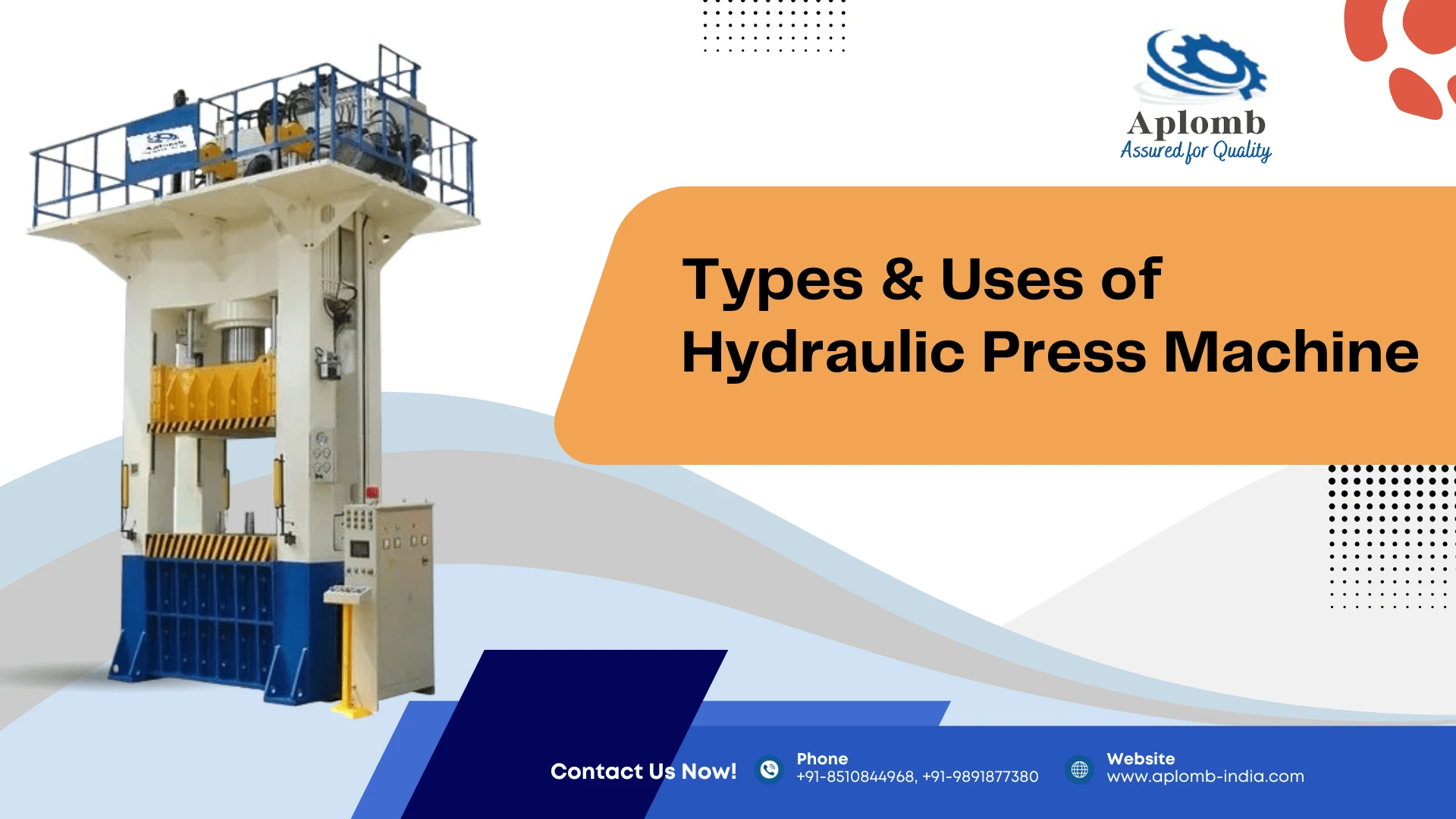
Aplomb Machines India Private Limited has earned a strong reputation for delivering robust and efficient industrial machinery, and hydraulic press machine are among the most essential solutions used across modern manufacturing industries. From metal forming to molding and assembly operations, the hydraulic press plays a vital role in ensuring precision, strength, and productivity.
What Is Hydraulic Press ?
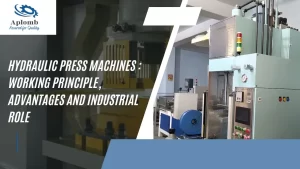
A hydraulic press is a machine that uses hydraulic pressure to generate a compressive force. It works on the principle of transmitting force through an incompressible fluid, usually oil, to perform tasks such as pressing, bending, forming, punching, and assembling components. Compared to mechanical presses, hydraulic presses offer better control, uniform pressure, and higher accuracy.
How Hydraulic Press Machines Work
Understanding how these machines work is important before we talk about their types and uses. A hydraulic press has several main parts that work together.
The main parts include a hydraulic cylinder, piston, hydraulic fluid (usually oil), pump, and control system. When the pump pushes the hydraulic fluid into the cylinder, it creates pressure. This pressure moves the piston, which then applies force to whatever material is being pressed.
The beauty of this system is that a small force applied to a small piston can create a much larger force on a bigger piston. This is why hydraulic presses can create such strong pressure with relatively less input power.
The control system lets the operator decide how much pressure to apply and how fast the machine should work. Modern hydraulic presses have very precise controls that can be programmed for different jobs.
Types of Hydraulic Press Machines
There are many different types of hydraulic press machines. Each type is designed for specific kinds of work. Let’s look at the most common types that Aplomb Machines India Private Limited deals with.
Manual Hydraulic Press
Manual hydraulic presses are the simplest type. They are operated by hand using a lever or hand pump. These machines are perfect for small workshops and light-duty work.
These presses are popular because they are cheap to buy and maintain. They don’t need electricity to work, which makes them useful in places where power supply is not reliable. Small repair shops and hobby workshops often use these machines.
The main advantage is that they give the operator full control over the pressing process. However, they can only produce limited force and are slower than automatic machines.
Electric Hydraulic Press
Electric hydraulic presses use an electric motor to run the hydraulic pump. This makes them faster and more powerful than manual presses. They are very common in manufacturing industries.
These machines can work continuously for long periods. The electric motor provides consistent power, which means the pressing force remains steady. This is important when making products that need to be exactly the same.
Electric hydraulic presses can be programmed to do the same job over and over again. This reduces mistakes and makes production faster. Many factories prefer these machines because they increase productivity.
Pneumatic Hydraulic Press
Pneumatic hydraulic presses use compressed air along with hydraulic fluid. They combine the benefits of both pneumatic and hydraulic systems. These machines are very fast and precise.
The compressed air helps in quick movement of the machine parts, while the hydraulic system provides strong force. This combination makes them perfect for jobs that need both speed and power.
These machines are often used in assembly lines where parts need to be pressed quickly and accurately. They are also popular in industries where clean operation is important because they produce less heat and noise.
H-Frame Hydraulic Press
H-frame hydraulic presses get their name from their shape, which looks like the letter H. These are very strong machines that can handle heavy-duty work. The H-frame design makes them very stable and able to handle high pressure without bending.
These machines are perfect for straightening bent parts, pressing bearings, and other heavy-duty tasks. Many automotive repair shops use H-frame presses because they can handle the tough jobs that cars and trucks need.
The open design of H-frame presses makes it easy to work with large or oddly shaped parts. Workers can access the work area from three sides, which makes the job easier and safer.
C-Frame Hydraulic Press
C-frame hydraulic presses have a C-shaped frame that provides good access to the work area. These machines are smaller than H-frame presses but still very useful for many jobs.
The C-frame design allows easy loading and unloading of materials. This makes them popular for production work where many parts need to be processed quickly. The open front gives workers good visibility of their work.
These machines are commonly used for punching holes, forming metal parts, and assembly operations. They take up less floor space than H-frame presses, which is important in crowded workshops.
Four-Column Hydraulic Press
Four-column hydraulic presses have four vertical columns that guide the movement of the press. This design provides very accurate and stable operation. These machines are often used for precision work.
The four-column design ensures that the pressing force is applied evenly across the entire surface. This is very important when working with large sheets or when making parts that need to be very accurate.
These machines are popular in industries that make car parts, appliances, and other products where precision is important. They can handle large workpieces and provide excellent repeatability.
Uses of Hydraulic Press Machines
Hydraulic press machines have many uses across different industries. At Aplomb Machines India Private Limited, we see these machines helping businesses in many ways.
Metal Forming and Shaping
One of the most common uses of hydraulic presses is forming and shaping metal. These machines can bend, stretch, and shape metal parts with great precision. This is very important in manufacturing industries.
Car manufacturers use hydraulic presses to make body panels, doors, and other parts. The machines can shape large sheets of metal into complex curves and angles that would be impossible to make by hand.
Kitchen appliance makers use these machines to form sinks, pots, and pans. The smooth, consistent pressure from hydraulic presses creates products with excellent surface finish and accurate dimensions.
Forging Operations
Forging is a process where metal is shaped by applying pressure. Hydraulic presses are perfect for this because they can apply steady, controlled pressure for long periods.
Forged parts are stronger than cast or machined parts because the metal grain structure is improved during forging. This makes hydraulic press forging popular for making critical parts like aircraft components and engine parts.
The ability to control pressure precisely makes hydraulic presses ideal for both hot and cold forging operations. Different metals require different pressures and temperatures, and hydraulic presses can be adjusted for each material.
Assembly Operations
Many products are assembled using hydraulic presses. These machines can press parts together with exact force, ensuring proper fit and strong joints.
Electronics manufacturers use small hydraulic presses to assemble circuit boards and install components. The precise control prevents damage to delicate parts while ensuring secure connections.
Furniture makers use hydraulic presses to join wood pieces and install hardware. The even pressure distribution creates strong, lasting joints that won’t come apart over time.
Punching and Cutting
Hydraulic presses are excellent for punching holes and cutting materials. The steady pressure creates clean, accurate cuts without the vibration that cutting tools sometimes cause.
Sheet metal shops use hydraulic presses with special dies to punch holes, cut shapes, and create features in metal parts. The precision of these machines means less waste and better quality parts.
Leather and fabric industries use hydraulic presses to cut patterns for shoes, bags, and clothing. The clean cuts reduce fraying and create professional-looking edges.
Powder Compacting
In powder metallurgy, hydraulic presses compact metal powders into solid parts. This process creates parts with properties that are difficult to achieve with other manufacturing methods.
The high pressure from hydraulic presses forces the powder particles together, creating dense, strong parts. These parts are then heated in a furnace to create the final product.
This process is used to make gears, bearings, and other precision parts. It’s especially useful for parts with complex shapes that would be expensive to machine from solid metal.
Plastic Molding
Hydraulic presses are widely used in plastic molding operations. They provide the steady pressure needed to force plastic material into molds and create finished parts.
Compression molding uses hydraulic presses to squeeze plastic material into the shape of a mold. This process is used to make everything from bottle caps to car parts.
Transfer molding uses hydraulic pressure to move plastic material from one chamber into a mold. This process creates parts with excellent surface finish and precise dimensions.
Testing and Quality Control
Hydraulic presses are also used for testing materials and finished products. They can apply known forces to test how strong materials are and whether products will hold up in use.
Concrete testing uses hydraulic presses to crush concrete samples and measure their strength. This ensures that buildings and roads will be safe and durable.
Product testing uses hydraulic presses to simulate the forces that products will experience during use. This helps manufacturers improve their designs and prevent failures.
Industries That Use Hydraulic Press Machines
Many different industries rely on hydraulic press machines for their operations. Understanding these industries helps us see how important these machines are to modern manufacturing.
Automotive Industry
The automotive industry is one of the biggest users of hydraulic press machines. Car manufacturers use these machines to make body panels, engine parts, and many other components.
Large hydraulic presses stamp out car doors, hoods, and fenders from sheet metal. These parts need to be made quickly and accurately to keep production lines moving smoothly.
Smaller hydraulic presses are used to make engine parts like pistons and connecting rods. The precision of these machines ensures that engine parts fit together perfectly and work reliably.
Aerospace Industry
The aerospace industry uses hydraulic presses to make aircraft parts that must be extremely strong and lightweight. The precision of these machines is critical for safety.
Wing parts, fuselage sections, and engine components are often made using hydraulic presses. The high pressures involved help create parts with excellent strength-to-weight ratios.
The ability to work with advanced materials like titanium and carbon fiber composites makes hydraulic presses essential for modern aircraft manufacturing.
Construction Industry
The construction industry uses hydraulic presses to make building materials and components. Concrete blocks, steel beams, and other structural elements often involve hydraulic pressing in their manufacture.
Precast concrete manufacturers use hydraulic presses to compress concrete into forms, creating stronger and more durable building blocks.
Steel fabricators use hydraulic presses to shape beams, columns, and other structural members. The precision of these machines ensures that building components fit together properly.
Appliance Manufacturing
Home appliance manufacturers rely heavily on hydraulic presses to form metal parts for refrigerators, washing machines, stoves, and other products.
The smooth surfaces created by hydraulic pressing are perfect for appliance exteriors that need to look good and resist corrosion.
Internal components like brackets, supports, and housings are also made using hydraulic presses. These parts need to be strong and accurate to ensure appliances work reliably.
Benefits of Using Hydraulic Press Machines
There are many reasons why industries choose hydraulic press machines over other types of equipment. At Aplomb Machines India Private Limited, we help customers understand these benefits.
High Force Capability
Hydraulic presses can generate much more force than mechanical presses of similar size. This makes them ideal for heavy-duty applications that require tremendous pressure.
The force can be precisely controlled and maintained for long periods. This is important for operations that require sustained pressure to achieve good results.
Precision and Control
Modern hydraulic presses offer excellent control over force, speed, and position. Operators can adjust these parameters to match the requirements of each job.
Computer controls allow for programming complex pressing cycles that can be repeated exactly. This ensures consistent quality and reduces operator error.
Versatility
Hydraulic presses can handle a wide variety of materials and operations. The same machine can often perform multiple different tasks by changing dies and adjusting parameters.
This versatility makes hydraulic presses a good investment because they can adapt to changing production needs over time.
Safety Features
Modern hydraulic presses include many safety features that protect operators and equipment. Emergency stops, light curtains, and two-hand controls help prevent accidents.
The smooth operation of hydraulic systems reduces vibration and noise, creating a safer and more comfortable work environment.
Energy Efficiency
Hydraulic presses only use energy when they are actually working. Unlike mechanical presses that run continuously, hydraulic systems can idle with minimal energy consumption.
Variable-speed pumps and energy recovery systems make modern hydraulic presses even more efficient, reducing operating costs.
Conclusion
Hydraulic press machines are essential tools in modern manufacturing. Their ability to generate high forces with precise control makes them valuable for many different applications.
From simple manual presses for small workshops to large automated systems for mass production, there is a hydraulic press suitable for almost every need. The variety of types and configurations ensures that businesses can find the right machine for their specific requirements.
At Aplomb Machines India Private Limited, we are committed to providing quality hydraulic press machines that help our customers succeed. Whether you need a machine for metal forming, assembly, or testing, we can help you choose the right equipment for your needs.
The future of hydraulic press technology continues to evolve with advances in controls, materials, and energy efficiency. These improvements will make hydraulic presses even more valuable tools for manufacturing in the years to come.
Understanding the types and uses of hydraulic press machines helps businesses make informed decisions about their equipment needs. With the right hydraulic press, companies can improve their productivity, quality, and competitiveness in today’s demanding marketplace.